
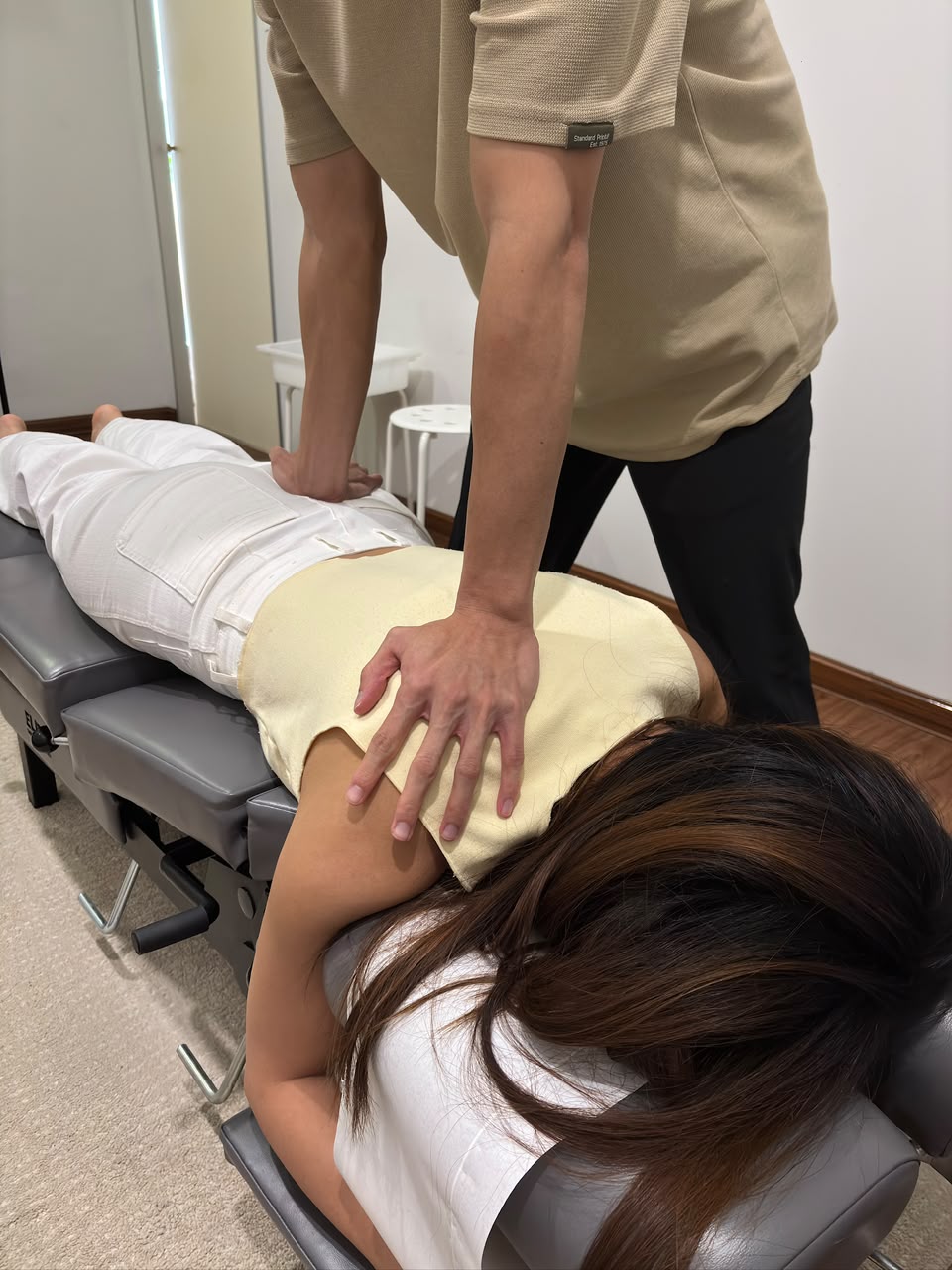
If you spend most of your workday hunched over a keyboard, you already know the stiffness that creeps into your neck by mid-afternoon and the dull ache that settles into your lower back before the day is done. Seeking out the best chiropractor in Kepong is one of the smartest moves a desk worker can make — but professional care works best when paired with daily habits that reinforce every adjustment you receive.
Postural correction exercises combined with spinal manipulation are more effective at reducing pain and improving cervical range of motion than exercise alone.
Source: Journal of Manipulative and Physiological Therapeutics (JMPT)
This guide provides five practical, evidence-backed postural correction exercises for office workers that you can start today to reverse the patterns that desk work quietly destroys. Each step builds on the last. You will begin with a simple neck exercise to reverse tech neck, move through targeted upper and lower-back movements, and learn how to lock in those gains with a professional chiropractic adjustment KL. Whether you are dealing with a stiff neck, rounded shoulders, or chronic lower back fatigue, the framework below is designed for the realities of a Kepong worker's schedule — no gym required, no equipment needed, and no hour-long routines to carve out of a packed workday.
Step 1: Perform the Chin Tuck to Reverse Tech Neck
Tech neck is quietly damaging your spine. According to the Journal of Physical Therapy Science, approximately 75% of office workers experience musculoskeletal pain, with the neck and upper back bearing the heaviest burden. Hours of forward-head posture at a screen stretch and weaken the deep cervical flexors — the small stabilizing muscles that hold your head in proper alignment. The chin tuck is one of the most effective postural correction exercises for office workers precisely because it targets this weakness directly, and it requires no equipment, no gym, and less than two minutes of your workday.
Follow these steps to perform the chin tuck correctly:
-
Sit upright in your chair and look straight ahead, keeping your eyes level and your shoulders relaxed.
-
Draw your chin straight back slowly, as if you are trying to create a double chin — no tilting or nodding, just a clean horizontal retraction.
-
Hold the position for 5 seconds, then release fully.
-
Repeat 10 times per set, ideally every two hours throughout your workday.
This movement directly activates the longus colli and longus capitis muscles, which are consistently weakened by prolonged screen use. Strengthening them pulls the head back over the shoulders, reducing compressive load on cervical discs. Among the full range of postural correction exercises for office workers, the chin tuck is consistently recommended as the foundational starting point — and clinics offering corrective care for office workers typically introduce it before progressing to any hands-on spinal work. If you are searching for the best chiropractor in Kepong to guide your recovery alongside these exercises, pairing professional assessment with daily chin tucks tends to produce faster, longer-lasting results.
Next, you will want to address the rounded shoulders that typically accompany tech neck — and that is exactly where scapular squeezes come in.
Step 2: Use Scapular Squeezes to Open the Chest
Rounded shoulders are one of the most common posture complaints among office workers in Kepong and across KL. Hours at a desk tighten the chest muscles and weaken the upper back, pulling the thoracic spine into a forward curve. Scapular squeezes are among the most effective postural correction exercises precisely because they directly reverse that pattern. According to the Journal of Manipulative and Physiological Therapeutics, postural correction exercises combined with spinal manipulation are more effective at reducing pain and improving cervical range of motion than exercise alone, which is why many clinicians offering chiropractic adjustments in KL will prescribe scapular squeezes as home exercises.
> "Pull your shoulder blades back as if tucking them into your back pockets — that one cue resets muscles that hours of typing have switched off."
Perform the movement correctly with these steps:
-
Sit at the edge of your chair with feet flat on the floor and spine upright.
-
Relax your arms at your sides and drop any tension from your neck and jaw.
-
Pull your shoulder blades back and down simultaneously, as though you’re trying to slide them into your back pockets.
-
Hold the squeeze firmly for 10 seconds, breathing steadily throughout.
-
Release slowly and repeat five times per set.
-
Perform one set every hour to continually reset the thoracic spine throughout your workday.
If persistent tightness or pain is limiting your range of motion, a professional chiropractic adjustment KL can help relieve soft tissue restrictions alongside your exercise routine. In some cases, adjunct therapies — such as targeted tissue recovery options — can accelerate the recovery process of how the muscles respond to corrective movement.
When done consistently, scapular squeezes rebuild the endurance your upper back needs to hold good posture without effort. And once your shoulders are stable, the next challenge is the lower spine, which is exactly what the seated pelvic tilt addresses.
Step 3: Activate the Core with Seated Pelvic Tilts
With your chin tucked and your shoulders drawn back, the next weak link in your posture chain is the lower back. Over time, a passive lumbar slump compresses the intervertebral discs, leading to early spinal disc degeneration. This issue prompts many patients to visit a chiropractor in Kepong sooner than anticipated. Seated pelvic tilts target this directly, restoring the natural lumbar curve and keeping your sacroiliac joint mobile throughout the workday.
-
Sit tall at the front edge of your chair with both feet flat on the floor and your hands resting on your thighs.
-
Arch gently into an anterior tilt — push your stomach forward and let your lower back curve inward, as if you are trying to show off your belt buckle.
-
Hold that position for two full seconds, breathing normally; avoid forcing the arch beyond a comfortable range.
-
Tilt your tailbone under, pressing your lower back against the chair in a posterior tilt—this counters the typical office slump.
-
Hold the tucked position for two seconds, engaging the deep abdominals gently without bracing hard.
-
Repeat the full anterior-to-posterior cycle 15 times, moving slowly and with control to build lumbar mobility rather than momentum.
When performed consistently, this exercise redistributes compressive load across the lumbar discs instead of concentrating it at L4-L5 and L5-S1 — the two levels most vulnerable to degeneration in sedentary workers. According to Healthcare (MDPI Journal), technologies like Tecar therapy accelerate tissue repair, reduce inflammation by increasing deep thermal activity in the musculoskeletal system, making it a valuable clinical complement when early disc irritation has already set in. However, no home exercise fully replaces a professional spinal assessment. If you notice radiating leg pain or persistent stiffness despite daily pelvic tilts, a chiropractic adjustment in KL with a qualified clinician is the logical next step — and that is exactly what Step 4 covers.
Step 4: Schedule a Professional Chiropractic Adjustment with the Best Chiropractor in Kepong
Chin tucks, scapular squeezes, and pelvic tilts build a strong foundation, but they cannot correct vertebral subluxations on their own. Professional care closes that gap. Here is how to pursue it effectively.
-
Book a consultation at Chiropractic House Kepong or a comparable clinic nearby. Bring notes on your specific pain points — neck stiffness, mid-back tension, lower back fatigue — so the chiropractor kl can prioritize the key areas.
-
Undergo a full spinal assessment to identify which vertebrae are misaligned. A structured assessment maps the specific joints losing range of motion, giving the clinician a precise picture rather than a generic snapshot.
-
Receive a tailored adjustment targeting those specific subluxations. Restoring proper joint mechanics reduces nerve irritation and allows the postural muscles you have been training in Steps 1 through 3 to function without compensation patterns pulling them off course.
-
Add Swiss DolorClast shockwave therapy in Kepong sessions if chronic trigger points persist. Research published in the Journal of Orthopaedic Surgery and Research confirms that Radial Shockwave Therapy significantly reduces pain and improves functional outcomes in patients with chronic myofascial trigger points — making it a strong complement to manual adjustment for stubborn desk-related muscle knots.
Radial Shockwave Therapy (Swiss DolorClast) significantly reduces pain and improves functional outcomes in patients with chronic myofascial trigger points.
Source: Journal of Orthopaedic Surgery and Research
One professional session rarely resolves years of postural strain. However, pairing consistent home exercises with periodic clinical care tends to produce measurably faster results than either approach alone. The next section outlines exactly how to lock in those gains over the long term.
How to Maintain Your Results: Key Takeaways
The four steps above work only when you treat posture correction as an ongoing practice rather than a one-time fix. Use the checklist below to lock in your progress.
-
Set a movement timer every 60 minutes. Stand, perform a quick chin tuck and scapular squeeze, then return to work. Consistency compounds: small, frequent resets prevent the muscle fatigue that pulls you back into a slump.
-
Book a monthly chiropractic adjustment. Any qualified chiropractor in KL workers rely on will confirm that minor vertebral strains become chronic injuries when left unaddressed. A monthly visit keeps the spine correctly aligned between your home exercise sessions.
-
Use advanced therapy for stubborn soft-tissue knots. Chiropractic House integrates traditional adjustments with Swiss Dolorclast shockwave and Tecar therapy, delivering targeted, non-invasive relief where exercise alone falls short.
-
Audit your ergonomic setup today. Position your monitor so the top edge sits at eye level. This single adjustment supports every correction you have built — without it, forward head posture returns within days.
Posture repair is a system, not a single session. If you are ready to accelerate your results, book a consultation at Chiropractic House Kepong — a clinic built specifically to serve KL's desk-bound workforce with personalized, technology-supported care.


