
Last reviewed: 22 October 2026
Most “heel spur” pain is actually plantar fasciitis, irritation of the tissue under the heel. A best-practice guide recommends starting with about six weeks of daily stretching, foot taping and education, and considering shockwave therapy if that has not worked. A spur on an X-ray does not always explain the pain.
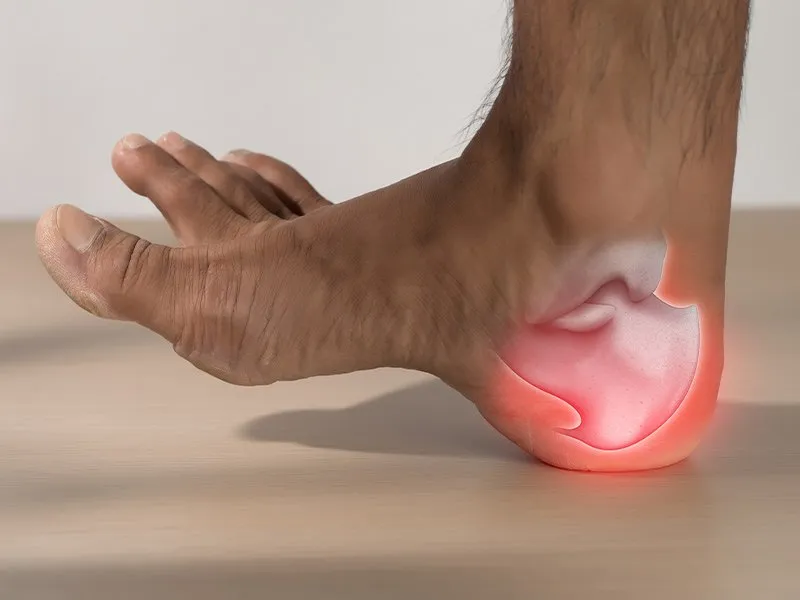
“Heel spur treatment KL” is a steady search because heel pain makes the first steps of the day hard. A heel spur is a small bony growth where the plantar fascia attaches to the heel bone. This guide explains what usually causes the pain, what a sensible treatment order looks like, and where shockwave therapy fits.
Heel spur or plantar fasciitis?
The most common cause of pain under the heel is plantar fasciitis, a problem of the thick band of tissue running under the foot. Heel spurs are often found on X-rays of people with this condition, but they can also be seen in people with no pain, and clinical guidelines list heel spur syndrome as only one of several possible causes of heel pain, alongside heel fat-pad problems, nerve irritation and stress fractures. That is why an examination matters more than the picture.
Typical signs are sharp pain with the first steps in the morning or after sitting, easing as you walk and returning after long standing or running. Our article on shockwave therapy cost, benefits and how it works also discusses chronic heel conditions.
The treatment order guidelines suggest
A best-practice guide published in the British Journal of Sports Medicine and summarised by NIHR Evidence describes a stepped plan:
- Core care (about 6 weeks): daily calf and plantar fascia stretching, daily foot taping and education such as supportive footwear. The three work together.
- Shockwave therapy: if pain remains after about six weeks of core care.
- Custom insoles: if shockwave has not helped after around eight weeks.
- Steroid injection: considered later, with weaker evidence.
A separate clinical practice guideline from the American Physical Therapy Association’s orthopaedic section (2023) also supports manual therapy, stretching and taping, and describes dry needling of calf and foot trigger points as an option.
What we can offer
- Assessment of the foot, ankle, calf and lower back to find what is loading the heel.
- Hands-on care, including chiropractic adjustment of stiff joints where suitable and tecar-assisted manual therapy for tight tissue.
- Dry needling for calf and foot trigger points: see dry needling.
- Shockwave therapy for persistent heel pain: see Swiss Dolorclast shockwave therapy and the cost guide on shockwave therapy in Malaysia.
- Home plan with stretching, footwear and load advice.
What it costs
A first session costs RM250 to RM410 and follow-ups cost less. Shockwave sessions are priced separately and many clinics offer packages, so ask what a course would total before starting. General ranges are in our price guide.
When heel pain needs a doctor
See a doctor if you have: heel pain after a fall or injury, a hot, red or swollen heel, fever, numbness or tingling in the foot, pain at night that does not ease, or pain that has not improved after several months of care. People with diabetes should have any new foot pain checked promptly.
Frequently asked questions
Do I need surgery for a heel spur?
Most heel pain is managed without surgery. A stepped plan of stretching, taping and education comes first, and further options are considered only if pain persists. Speak to your doctor about surgery if a long course of conservative care has not helped.
Does a heel spur on X-ray explain my pain?
Not necessarily. Imaging findings can be non-specific, and plantar fasciitis is the most common cause of pain under the heel. A clinician should examine you rather than rely on the X-ray alone.
How long does heel pain take to settle?
Recovery can take weeks to months. Guidelines describe a first stage of about six weeks of consistent stretching, taping and education before other options are added.
How much does treatment cost in KL?
At Chiropractic House a first session costs RM250 to RM410 and follow-ups cost less. Shockwave sessions are priced separately, so ask for the current fee when you book.
Medical disclaimer: this article is general information, not a diagnosis or personal medical advice. If you are unsure about a symptom, see a doctor.
Written by Eugene Gan, Chiropractor, Bachelor of Science (Hons) Chiropractic, accredited by the Council on Chiropractic Education Australasia (CCEA). Chiropractic House, Suria @ North Kiara, Segambut, Kuala Lumpur.


