
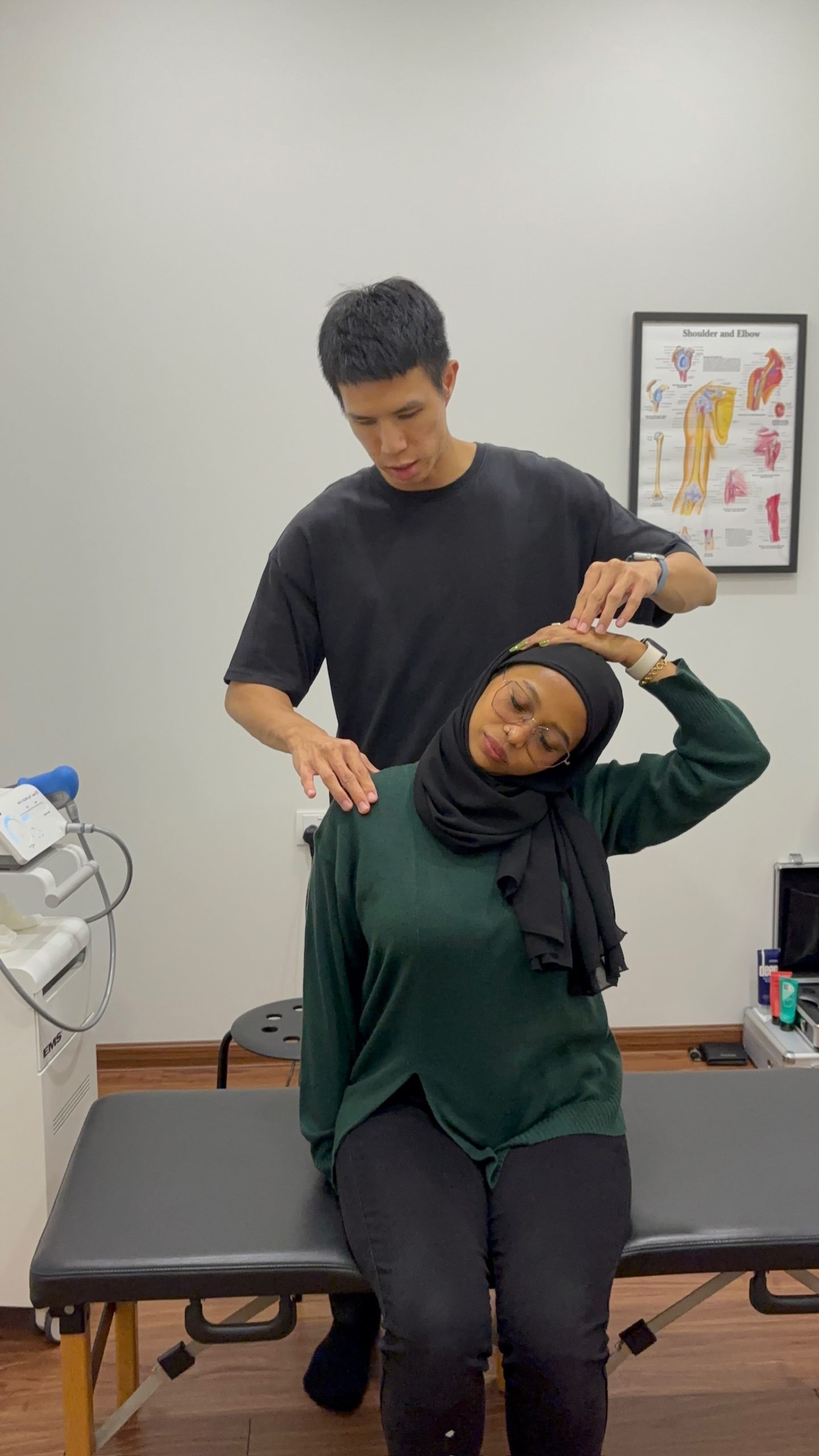
Finding the right chiropractor can feel overwhelming when you're already dealing with pain — and knowing how to find a chiropractor in KL who genuinely specialises in your condition, rather than simply the closest or most advertised option, is the first step toward real recovery. Kuala Lumpur has no shortage of chiropractic clinics, but the gap between a modern, evidence-based practice and a generic adjustment centre is significant. Whether you're managing chronic lower back pain, recovering from a sports injury, or trying to prevent one, this guide walks you through a practical, step-by-step framework for identifying the right clinic, verifying clinical standards, and making a confident decision before your first appointment.
How to Identify a Modern Chiropractic Clinic in KL
Knowing how to find a chiropractor for lower back pain Kuala Lumpur residents can trust — one who is genuinely equipped to treat lower back pain and sports injuries rather than simply the most conveniently located option — can make the difference between lasting relief and a revolving door of temporary fixes. Kuala Lumpur's chiropractic landscape has expanded rapidly, but quality varies considerably from clinic to clinic.
The steps below give you a practical framework for evaluating any clinic before you book your first appointment.
-
Verify the technology stack. Modern evidence-based clinics use digital X-ray, postural analysis software, or spinal decompression units. Generic treatment rooms with minimal diagnostic equipment are a red flag.
-
Check practitioner credentials and institutional affiliations. Look for chiropractors registered with the Malaysian Chiropractic Association and any postgraduate sports or rehabilitation specializations — these signal a higher standard of care.
-
Review condition-specific treatment narratives. A credible clinic publishes real case outcomes; for example, [one patient's recovery story](https://www.chiropractichouse.com.my/mr-adams-testimonial/) illustrates exactly the kind of transparent, outcome-focused communication you should expect.
-
Confirm a multimodal approach. Effective clinics combine spinal adjustments with complementary therapies — [trigger-point release techniques](https://www.chiropractichouse.com.my/dry-needling/) like dry needling, for instance, directly address the muscular component of lower back pain.
-
Read verified reviews on third-party platforms such as Yelp's KL chiropractor listings to cross-reference patient sentiment independent of a clinic's own website. A Malaysian study on chiropractic utilization in Klang Valley shows that local patient demand exists, which makes clinic selection and communication especially important in KL.
-
Ask about sports-specific protocols. Clinics treating athletes should articulate distinct rehabilitation pathways — not a one-size-fits-all adjustment plan.
Start with technology — it shapes every step that follows.
How to Find a Chiropractor in KL: Step 1 — Verify the Clinic's Technology Stack
Once you've identified clinics that look credible on the surface, the next practical step is confirming that the equipment behind the doors actually matches the claims on the website. For anyone searching for a chiropractor for lower back pain Kuala Lumpur — or a sports injury chiropractor KL residents can rely on for performance-focused recovery — the technology a clinic uses often determines how fast you recover, and how completely.
-
Request a full equipment list before booking. Reputable clinics will readily share which diagnostic and treatment tools they use — spinal decompression tables, digital posture analysis systems, or shockwave therapy units are standard benchmarks of a modern setup.
-
Confirm diagnostic imaging partnerships. Clinics that coordinate with X-ray or MRI providers can rule out structural causes of pain before treatment begins, which is a critical safety step for lower back conditions and complex sports injuries alike.
-
Ask whether TECAR or shockwave therapy is available. These modalities are now widely recognized for accelerating soft-tissue recovery. If a clinic offers [advanced regenerative options](https://www.chiropractichouse.com.my/what-is-tecar-therapy/), that signals investment in evidence-based care beyond manual adjustment alone.
-
Evaluate the intake process. A structured clinical intake — postural screening, pain history, range-of-motion testing — indicates systematic thinking, not a one-size-fits-all adjustment approach.
-
Check for multi-modal treatment capacity. Clinics that combine chiropractic adjustment with physiotherapy tools or soft-tissue therapy can adapt your plan as your condition evolves, which is especially important for [knowing when to escalate care](https://www.chiropractichouse.com.my/when-to-see-a-chiropractor/).
-
Cross-reference equipment claims with patient reviews on platforms like Yelp's KL chiropractor listings. If multiple reviewers independently mention specific tools or techniques, that consistency adds credibility.
Verifying technology before you commit protects you from paying for outdated methods — and sets the stage for asking an equally important question: does this clinic specialize in your specific condition?
Step 2: Assess Specialization for Your Specific Injury
Technology matters, but equipment alone doesn't tell you whether a clinic has genuine expertise in your condition. A sports injury chiropractor in KL and a practitioner who primarily treats general posture complaints may use similar tables and adjustment tools — what separates them is clinical focus, case experience, and the treatment protocols they apply.
Use this checklist to assess whether a clinic's specialization actually matches your needs:
-
Review the clinic's stated treatment areas. Look for condition-specific language — "lumbar disc herniation," "ACL rehabilitation," "rotator cuff strain" — rather than broad terms like "pain relief" or "wellness care." Vague copy often signals a generalist practice.
-
Check practitioner credentials beyond basic licensure. Post-graduate certifications in sports chiropractic, rehabilitation, or specific techniques (such as Active Release Technique or Graston) indicate focused advanced training.
-
Ask directly about case volume. Inquire how frequently the clinic treats patients with your specific condition. A practitioner who sees sports injuries daily develops pattern recognition that occasional exposure cannot replicate.
-
Look for complementary modalities. Specialized clinics typically pair adjustments with soft-tissue therapies. For persistent sports injuries, [treatment options like shockwave therapy](https://www.chiropractichouse.com.my/what-is-shockwave-therapy/) can accelerate tissue healing in ways spinal manipulation alone cannot.
-
Scan published educational content. Clinics with deep specialization tend to produce [condition-specific resources](https://www.chiropractichouse.com.my/blog/) on topics like lower back mechanics or injury recovery — a reliable signal of genuine clinical investment.
-
Confirm sports-context experience. Ask whether practitioners have worked with athletes, sports teams, or active populations. This shapes how they approach load management, return-to-play timelines, and performance-oriented recovery.
Once you've matched a clinic's specialization to your injury profile, the next critical filter is how they actually assess you — which is exactly what the consultation and diagnostic process reveals.
Step 3: Evaluate the Consultation and Diagnostic Process
Understanding the chiropractic treatment step by step process before you commit tells you a great deal about a clinic's clinical rigor. A thorough diagnostic workflow separates evidence-informed practitioners from those who apply generic adjustments without understanding your specific condition — and this holds true whether you're evaluating a city-centre clinic or searching for the best chiropractor in Kepong closer to home.
Follow these steps to assess whether a clinic's consultation process meets a credible standard:
-
Request a pre-treatment intake call. A reputable clinic will discuss your symptoms, history, and goals before you arrive. Vague answers or immediate upselling at this stage is a red flag.
-
Confirm a physical and postural assessment is included. Your first appointment should involve range-of-motion testing, spinal palpation, and postural analysis — not just a verbal questionnaire.
-
Ask whether imaging referrals are available. For lower back pain with radiating symptoms, clinics should have a pathway to refer for X-rays or MRI if clinically indicated rather than proceeding blindly.
-
Verify that a written treatment plan is provided. After assessment, expect a documented plan outlining the recommended [approach to spinal correction](https://www.chiropractichouse.com.my/chiropractic-adjustment/), session frequency, and measurable goals — not an open-ended commitment.
-
Clarify how progress is tracked. Reputable clinics reassess outcomes at defined intervals, adjusting the plan if your response to care changes.
-
Check for transparent pricing before treatment begins. According to [WhatClinic's KL listings](https://www.whatclinic.com/chiropractic/malaysia/kuala-lumpur/back-pain-treatment), pricing varies significantly across KL providers, so getting a written estimate upfront protects you from unexpected costs.
A structured diagnostic process signals clinical accountability. Once you've confirmed the clinic's approach is thorough and transparent, the next practical consideration — especially in a city as traffic-heavy as KL — is whether you can realistically get there consistently enough to complete your care plan.
Step 4: Check for Hyper-Local Accessibility in KL
Even the best clinical credentials won't help you if getting to the clinic adds an hour to your commute through KL traffic. For anyone actively searching for a chiropractor for lower back pain Kuala Lumpur residents can reach without disrupting their daily routine, accessibility is a practical filter that directly affects whether you'll stay consistent with your treatment plan — and consistency is what drives recovery.
Follow this process to assess location fit before you commit:
-
Map the clinic against your daily route. Identify whether the clinic sits near your workplace, home, or a major transit hub. A location along your existing commute dramatically reduces drop-off rates mid-treatment.
-
Confirm parking and LRT access. KL traffic is notoriously unpredictable. Check whether the clinic offers validated parking, is within walking distance of an LRT or MRT station, and or sits in a covered mall complex.
-
Search by district, not just city. Searching broadly for "chiropractors in KL" returns results spread across dozens of neighborhoods. If you live or work in the north of the city, searching specifically for the best chiropractor in Kepong surfaces clinics like [Chiropractic House](https://www.chiropractichouse.com.my/), which serves both Kepong residents and surrounding KL suburbs.
-
Verify operating hours against your schedule. Some clinics close early on weekdays or don't open on Sundays. Cross-check hours on [WhatClinic](https://www.whatclinic.com/chiropractic/malaysia/kuala-lumpur/back-pain-treatment) or call directly — posted hours aren't always current.
-
Ask about multi-modal therapy availability on-site. Traveling to a separate facility for complementary treatments like [TECAR-assisted manual therapy](https://www.chiropractichouse.com.my/tecar-assisted-manual-therapy/) adds friction. Clinics offering integrated services under one roof reduce that burden significantly.
-
Factor in appointment lead time. A highly rated clinic two suburbs away with a three-week waitlist may serve you less well than a similarly qualified clinic that can see you within days.
Once you've shortlisted clinics that pass both the clinical and accessibility tests, the next layer of evaluation involves real-world patient outcomes — which brings us to the evidence patients leave behind in reviews and documented case journeys.
Step 5: Review Patient Journey and Video Evidence
Before booking, reviewing how a clinic presents its patient journey — through testimonials, before-and-after narratives, and video content — gives you a clearer picture of real-world outcomes than any credential alone. This is especially useful when evaluating a sports injury chiropractor KL patients rely on for performance-focused recovery, where documented case outcomes matter as much as listed qualifications.
Follow this process to evaluate the evidence effectively:
-
Search the clinic's YouTube channel for condition-specific content. Videos that walk through an actual lower back pain consultation or spinal adjustment, like this chiropractic lower back pain walkthrough, signal clinical transparency rather than surface-level marketing.
-
Look for named patient stories with specific conditions, not generic five-star praise. A testimonial describing "three months of sciatica resolved after six sessions" carries far more weight than "great service."
-
Check social media reels and short-form video for technique demonstrations. Clinics confident in their methods show their work publicly — watch for clear explanations of what each technique targets.
-
Assess whether the clinic explains complementary care alongside adjustments. A clinic that integrates soft-tissue recovery work into its patient journey treats the whole injury, not just the spine.
-
Cross-reference video claims with review platforms like Yelp's KL chiropractor listings to confirm that documented outcomes match what real patients report.
-
Note how the clinic handles setbacks in its content. Honest practitioners acknowledge cases where progress was slower than expected — this transparency is a strong trust signal.
Strong video evidence paired with consistent patient narratives indicates a clinic confident enough in its outcomes to document them openly. Once you've verified clinical credibility this way, the next practical question is how to support your recovery between sessions — which is where targeted at-home tools become essential.
How to Use a Massage Gun for Muscle Recovery Between Sessions
Chiropractic adjustments deliver lasting results only when supported by consistent at-home recovery. A massage gun is one of the most practical tools for maintaining tissue quality between clinic visits — here's how to use it effectively.
-
Choose the right attachment head before you start. A round ball head suits large muscle groups like the glutes and hamstrings; a flat head works better for the upper back and shoulders. Using the wrong attachment can create excessive pressure over bony structures.
-
Set the speed to low or medium for the first two minutes on any new muscle group. High-intensity percussion on cold, tight tissue can trigger protective muscle guarding — the opposite of what you want.
-
Move the device slowly along the muscle belly, spending roughly 30 to 60 seconds per zone. Avoid hovering directly over the spine, joints, or any area where you have acute inflammation or bruising.
-
Pair percussion with breathing — exhale as the gun passes over tender spots. Conscious breathing activates the parasympathetic response, amplifying the relaxation effect on tight fascia.
-
Time your sessions strategically. Using a massage gun 20 to 30 minutes before exercise loosens tissue; using it within an hour after exercise aids circulation and reduces delayed-onset soreness.
-
Stop immediately if sharp or radiating pain occurs. Percussion therapy is not appropriate for herniated discs, nerve entrapments, or post-surgical sites without explicit clinical clearance.
Used correctly, a massage gun bridges the gap between appointments and keeps your muscles responsive to adjustment. Understanding these practical recovery habits pairs naturally with the broader decision framework covered next — the key takeaways for choosing the right chiropractor in KL.
Key Takeaways for Choosing a Chiropractor in KL
After working through credential checks, treatment comparisons, technology reviews, and patient journey research, you're now equipped to make a confident, informed decision. This how-to summary consolidates the most critical steps into a repeatable action framework — use it as a final checklist before booking your first appointment.
-
Verify credentials first. Confirm your practitioner holds a recognized chiropractic degree and is registered with Malaysia's relevant regulatory body. Accreditation is non-negotiable, not a bonus.
-
Match the clinic's specialty to your condition. Lower back pain and sports injuries require different clinical approaches. Seek out practitioners with documented experience in your specific presentation, not just general musculoskeletal care.
-
Evaluate the diagnostic process. A quality clinic conducts a structured intake assessment before any hands-on treatment. If a practitioner skips straight to adjustments without understanding your history, that's a red flag.
-
Assess the technology available. As covered earlier, adjunct therapies — shockwave, TECAR, dry needling — significantly influence recovery outcomes for complex cases. Confirm what tools the clinic actually uses, not just lists on a website.
-
Search by district for practical accessibility. Broad searches often return clinics that are inconveniently located. If you're based in the north of the city, searching specifically for the best chiropractor in Kepong will surface locally accessible options — such as Chiropractic House — without adding unnecessary travel time to an already demanding treatment schedule.
-
Review patient evidence critically. Cross-reference testimonials across platforms like Yelp KL and WhatClinic to identify consistent patterns in care quality.
-
Factor in your at-home recovery plan. Clinic visits are only part of the equation. Tools like massage guns and mobility routines bridge the gap between sessions and support faster, more durable recovery.
With these checkpoints covered, the next step is taking action — and knowing exactly where to start your recovery journey.
How to Start Your Recovery Journey at Chiropractic House
Finding the best chiropractor in Kuala Lumpur for lower back pain and sports injuries comes down to taking one deliberate step at a time. Here is how to move from research to real relief.
-
Confirm your condition fits the clinic's scope. Review Chiropractic House's condition list — lower back pain, sports injuries, sciatica, and postural issues are all treated. Matching your complaint to a clinic's documented specialization avoids mismatched expectations from the start.
-
Book an initial assessment, not just a treatment session. A structured consultation allows the practitioner to screen for red flags, map your movement patterns, and recommend an evidence-based care plan rather than a one-size approach.
-
Prepare your history before the first visit. Bring any imaging, list previous treatments, and note when pain peaks. Detailed input accelerates diagnosis and reduces unnecessary repeat appointments.
-
Ask directly about practitioner credentials and affiliations. Internationally recognized training, sports certifications, and institutional affiliations are meaningful authority signals — not just marketing language. Do not hesitate to request this information.
-
Commit to the recommended session frequency. In practice, patients who follow through on the full care plan — rather than stopping at initial pain relief — achieve more durable outcomes.
-
Track progress between sessions. Use a simple pain-and-mobility journal. Objective feedback helps your chiropractor adjust the plan and demonstrates measurable improvement over time.
Consistent, informed action is what separates short-term relief from lasting recovery. Start with a single honest consultation — your spine will thank you for it.
The 2026 chiropractic landscape in KL is defined by Integrated Clinical Care combining physiotherapy and rehabilitation.
Source: Market Projections 2026
KL traffic makes patients prefer clinics within a 5km radius of home or work.
Source: 2026 Search Intent Factors


