
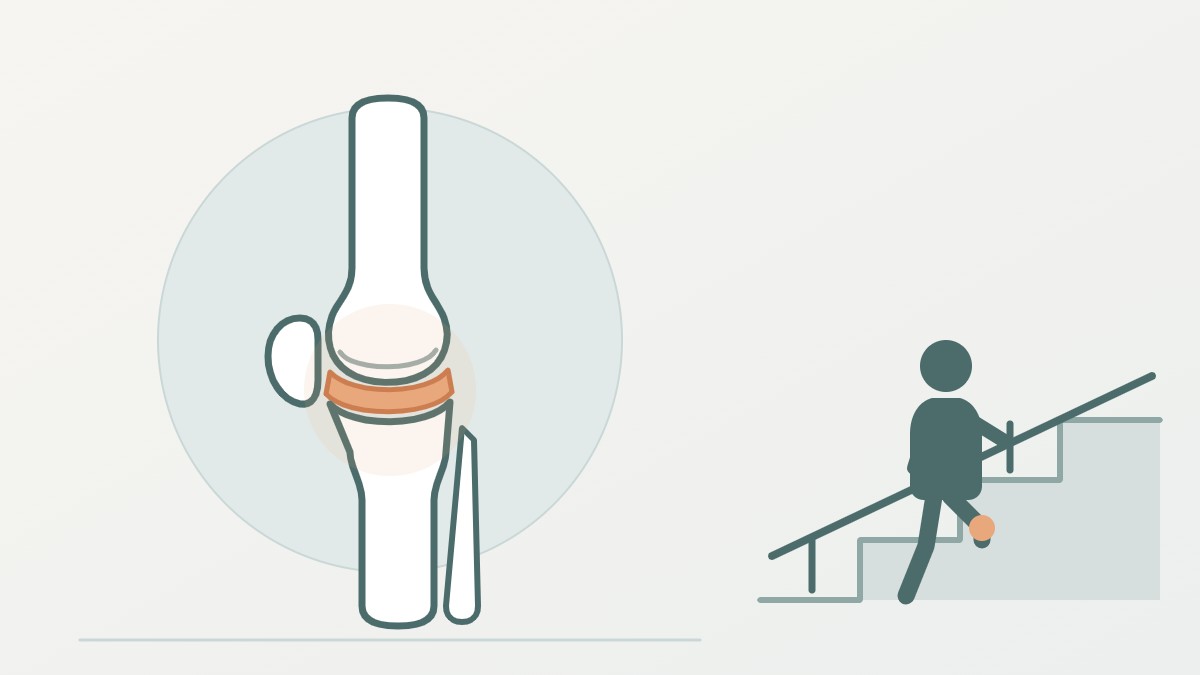
Knee osteoarthritis is the gradual thinning of cartilage inside the knee joint. It is common in Kuala Lumpur, it is not reversible, and no chiropractor can regrow cartilage. The treatments with the strongest evidence behind them are unglamorous: strengthening and aerobic exercise, weight management where it applies, and understanding your own condition well enough to pace it. Manual therapy — including chiropractic adjustment and soft-tissue work — has modest short-term evidence as an addition to exercise, not a replacement for it.
This article covers how common knee osteoarthritis is in Malaysia, the symptoms that mean you should see a doctor rather than a chiropractor, what the evidence actually says about each option, and what an assessment at our clinic in Segambut involves and costs.
Red flags: knee pain that needs a doctor, not a chiropractor
Most knee pain in adults over 50 is degenerative and not dangerous. Some of it is dangerous. Please do not book a chiropractic appointment if any of the following apply — seek medical care the same day:
- A hot, swollen, intensely painful knee, especially with fever or feeling generally unwell. Septic arthritis is an emergency.
- A knee that locks, gives way, or will not take your weight after a twist or a fall.
- Swelling, warmth or tenderness in the calf, particularly after long-haul travel, surgery or a spell of immobility — this can signal a deep vein thrombosis.
- Pain that wakes you at night, unexplained weight loss, or a history of cancer.
- New numbness, weakness or pins and needles travelling down the leg.
- Redness spreading across the skin over the joint.
For patients around Segambut, Kepong and Mont Kiara, the nearest emergency department is ParkCity Medical Centre in Desa ParkCity, which runs a 24-hour emergency service. Hospital Kuala Lumpur on Jalan Pahang is the nearest public alternative. If you are unsure, go.
How common is knee osteoarthritis in Malaysia?
More common than most people assume. The Malaysian Elders Longitudinal Research study surveyed 1,226 adults aged 55 and over across three parliamentary constituencies in Greater Kuala Lumpur. It found a crude prevalence of knee pain of 33.3%, and self-reported knee osteoarthritis symptoms in 30.8%. There were marked differences between ethnic groups — knee pain was reported by 44.6% of Malay participants, 31.9% of Indian participants and 23.5% of Chinese participants (Mat et al., PLOS ONE, 2019).
Two of the biggest modifiable drivers of knee osteoarthritis symptoms are body weight and thigh muscle strength, and nationally both are moving the wrong way. The National Health and Morbidity Survey 2023 found that 54.4% of Malaysian adults are overweight or obese by BMI, up from 44.5% in 2011, that one in three adults is not physically active, and that one in five lives with some functional limitation — difficulty walking or going up and down stairs being among the most commonly reported.
What the evidence supports
| Approach | What the evidence shows | Who provides it in Malaysia |
|---|---|---|
| Therapeutic exercise (strengthening plus aerobic) | High-quality evidence from 44 trials and 3,537 participants: pain reduced by the equivalent of about 12 points on a 100-point scale straight after treatment, with benefit still measurable two to six months later. Effect size comparable to anti-inflammatory medication. | Physiotherapists, chiropractors, qualified exercise professionals |
| Weight management | Part of the core non-pharmacological treatment set in the 2021 Malaysian consensus, alongside education and exercise. | GP, dietitian |
| Education and self-management | Core treatment. Changes how you pace activity and how you interpret flare-ups. | Any of the above |
| Manual therapy added to exercise | 19 trials: very low to moderate certainty of short-term benefit for pain, and high-certainty evidence of no added benefit over exercise alone in the long term. | Chiropractor, physiotherapist |
| Medication and injections | Slow-acting drugs early, then NSAIDs, intra-articular injections or short-term weak opioids if the background treatment is not enough. | Medical doctor only |
| Knee replacement | Considered for severe symptomatic knee osteoarthritis that has not responded to the steps above. | Orthopaedic surgeon |
Sources for the table: the Cochrane review of land-based exercise for knee osteoarthritis (Fransen et al., 2015), the Malaysian Delphi consensus on managing knee osteoarthritis published in BMC Musculoskeletal Disorders in 2021, the systematic review of manual therapy as an add-on to exercise (Runge et al., JOSPT, 2022), and NICE guideline NG226, which names therapeutic exercise and weight management as the core treatments for osteoarthritis.
Where chiropractic fits, and where it does not
Chiropractic care does not cure knee osteoarthritis. It does not reverse cartilage loss, it does not change what an X-ray shows, and it cannot substitute for the strength work you do yourself between appointments. If you are promised otherwise, it is fair to ask what that claim is based on.
What it can reasonably do is narrower and still useful. First, work out whether the knee is really the problem — stiff ankles, weak hips and referred pain from the lower back all present as knee pain, and treating the knee alone gets nowhere. Second, reduce pain enough that exercise becomes tolerable, which is where the short-term manual therapy evidence sits. Third, prescribe and progress that exercise. Fourth, recognise when the answer is a doctor and say so.
The regulatory picture in Malaysia
Chiropractic is one of seven recognised practice areas under the Traditional and Complementary Medicine Act 2016 (Act 775), regulated by the Traditional and Complementary Medicine Council under the Ministry of Health. Physiotherapy sits under separate legislation, the Allied Health Professions Act 2016 (Act 774), overseen by the Malaysian Allied Health Professions Council. The two professions overlap considerably on knee osteoarthritis, because both end up prescribing exercise. We have written a fuller comparison in chiropractor vs physiotherapist in KL.
We do use adjunct equipment such as shockwave therapy and Tecar therapy for specific soft-tissue problems, but it is worth being clear that the evidence for these machines in knee osteoarthritis specifically is limited, and neither is a substitute for loading the muscles around the joint.
Why knees in Kuala Lumpur take a beating
- Stairs, constantly. Walk-up shoplots in Segambut and Kepong, older apartment blocks without lifts, LRT and MRT station staircases. Going down stairs loads the knee harder than going up, which is why descent is usually the first thing patients complain about.
- Deep knee bending. Squat toilets, sitting cross-legged on the floor at family gatherings and kenduri, prayer positions, and reaching into low kitchen cabinets. Deep flexion under load is the position most people with knee osteoarthritis find hardest.
- Sedentary weekdays, sudden weekends. An hour crawling along Jalan Kuching each way, eight hours seated, then a burst of activity on Saturday. Knees tolerate steady load far better than they tolerate spikes.
- Heat and rain. The climate discourages outdoor walking, but an early-morning loop of an air-conditioned mall, a pool, or a stationary bike all count. What matters is that the muscle gets loaded regularly, not where.
What an assessment involves, and what it costs
A first session at Chiropractic House is RM250 to RM410 depending on what is involved, and follow-up sessions cost less. The first appointment is mostly assessment: history, movement and strength testing, watching how you walk and how you manage a step, and a plan you can actually follow at home. If the findings point to something other than osteoarthritis — inflammatory arthritis, a meniscal tear, infection — the right next step is a medical referral, and we will say so.
We are a cash-pay clinic and do not bill insurers directly. We issue receipts and clinical documentation for patients who want to claim themselves, and there is more detail in our guide to chiropractic insurance coverage in Malaysia.
The clinic is at Suria @ North Kiara, just off Jalan Kuching, which puts it within a short drive of Segambut, Dutamas, Sri Hartamas, Mont Kiara and Kepong. You can reach us through the contact page.
Frequently asked questions
Can a chiropractor reverse knee osteoarthritis?
No. Cartilage does not grow back, and no manual technique changes the structure of an arthritic joint. Symptoms can improve a great deal without the joint changing at all, which is the honest version of what treatment is aiming at.
My knee hurts and I am only 35. Is this osteoarthritis?
Possibly, but there are more likely explanations at that age, including patellofemoral pain, tendon problems and past injuries that never fully rehabilitated. Osteoarthritis becomes the more probable diagnosis from the fifties onward, and the Malaysian prevalence data above is drawn from adults aged 55 and over.
Is it safe to exercise a painful knee?
Generally yes, under guidance. In the Cochrane review, dropout rates in the exercise groups were no higher than in the control groups, and the adverse events reported were increases in knee or low back pain rather than anything serious. Expect some discomfort when starting, and expect it to settle as you continue.
Should I see a chiropractor or a physiotherapist?
For knee osteoarthritis specifically, either can help, because the core of good care in both professions is supervised exercise. Choose on the basis of who assesses you thoroughly, explains the plan, and gives you something to do between visits.
Do I need an X-ray before I come in?
Not usually. Imaging is arranged by a medical doctor when it will change the decision — for instance before considering injections or surgery. If your assessment suggests imaging is needed, you will be referred.
Medical disclaimer. This article is general information and not a substitute for individual medical advice, diagnosis or treatment. If you have knee pain, please have it assessed by a qualified practitioner. If any of the red flags above apply to you, seek medical care immediately.
Written by Eugene Gan, Chiropractor, Bachelor of Science (Hons) Chiropractic, accredited by the Council on Chiropractic Education Australasia (CCEA). Chiropractic House, Suria @ North Kiara, Segambut, Kuala Lumpur.


